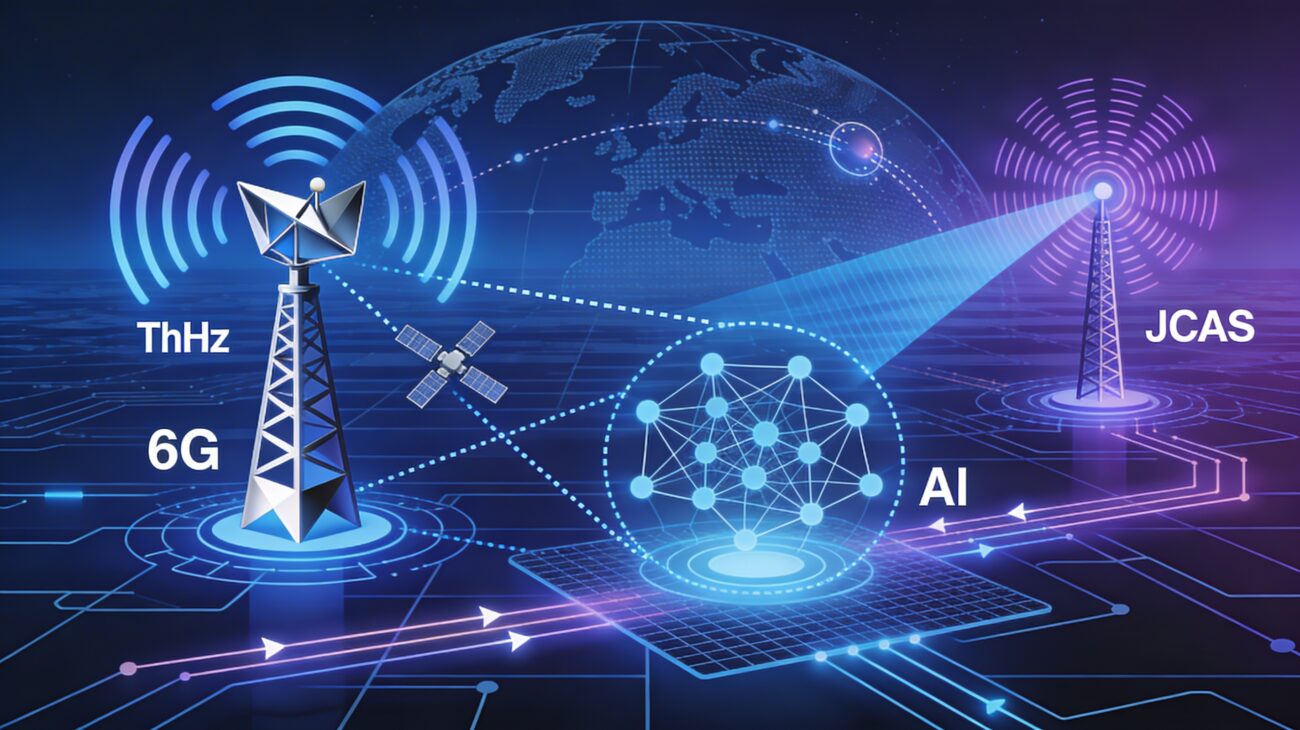
What is 6G and why does standardization matter now?
Sixth‑generation mobile networks, or 6G, are the next evolutionary step after 5G. They aim to deliver:
- Peak data rates of 1 terabit per second (Tbps) and beyond
- Sub‑millisecond latency for real‑time control
- Massive device density for pervasive Internet‑of‑Things (IoT) ecosystems
- Integrated AI/ML at the edge for autonomous decision making
Standardization is the process by which international bodies (ITU, 3GPP, IEEE, ETSI) agree on a common technical framework. Without a shared set of specifications, equipment from different vendors cannot interoperate, and operators cannot roll out network services at scale. The 2026 standardization cycle marks the first time that a complete, globally‑aligned 6G spec has been released, moving the technology from research labs into commercial planning.
Which organizations led the 2026 6G standard?
The 2026 specifications were produced through coordinated work of three primary bodies:
- International Telecommunication Union (ITU‑R) – issued the IMT‑2026 recommendation, defining performance targets and service categories.
- 3rd Generation Partnership Project (3GPP) – released Release 20 (and the first part of Release 21), covering radio access, core network architecture, and service APIs.
- IEEE 802.11‑ad/ax‑future working group – added complementary Wi‑Fi‑7/8 specifications for indoor ultra‑high‑speed backhaul.
These groups aligned their timelines through the Global 6G Alliance, a forum created in 2023 that includes governments, standards bodies, and major vendors. The alliance ensured that spectrum allocation, security requirements, and test‑bed validation were harmonized before the final documents were published.
How did the 2026 specifications differ from the 2024 draft?
Earlier drafts (2023‑2024) focused heavily on data‑rate goals and speculative use cases. The 2026 version introduced several concrete changes:
1. Revised spectrum bands
- Official inclusion of the 140 GHz‑to‑275 GHz range for “mmWave‑6G” services, with defined channel bandwidths up to 8 GHz.
- Allocation of 6 GHz‑to‑7 GHz “mid‑band” as a fallback for coverage‑critical applications.
- Clear coexistence rules with satellite constellations in the 30 GHz‑to‑40 GHz range.
2. New service categories
- Holographic‑type communication (HTC) – supports immersive 3‑D visual streams at 100 Gbps.
- Ultra‑Reliable Low‑Latency Communication 2.0 (URLLC‑2) – guarantees 0.1 ms latency for closed‑loop control in robotics and autonomous transport.
- Massive Integrated Sensing and Communication (MISC) – combines radar‑like sensing with data transmission for smart cities.
3. Integrated AI/ML framework
Release 20 added a mandatory AI‑native side‑channel for the radio access network (RAN). This side‑channel enables on‑device model updates without degrading user data throughput. The standard also defines a secure “model‑exchange” API for multi‑operator federated learning.
4. Security and privacy upgrades
- Post‑quantum cryptography (PQC) suites are now baseline for core‑network authentication.
- Zero‑Trust networking principles embedded in the 6G core, requiring continuous verification of every device and service.
Why did these changes happen? Key drivers behind the 2026 spec
Three forces pushed the specifications from a theoretical draft to a practical, implementable set of rules:
- Regulatory pressure for new spectrum – National regulators in the US, EU, China, and South Korea opened high‑frequency auctions in 2024. The standards had to lock in channelization and power limits before the first commercial licences were issued.
- Industrial demand for deterministic performance – Sectors such as autonomous manufacturing, remote surgery, and holographic telepresence required guarantees beyond what 5G could promise. Real‑world pilot projects (e.g., the “Digital Twin Factory” in Germany) demonstrated the need for sub‑0.5 ms latency and terabit‑scale backhaul.
- Advances in silicon and antenna technology – By 2025, silicon‑photonic transceivers and multi‑band antenna arrays capable of handling >10 GHz bandwidths became commercially viable, removing a major hardware barrier that had kept earlier drafts speculative.
What new technologies are now part of the 6G ecosystem?
Standardization does not create technology; it codifies it. The 2026 documents explicitly reference the following mature or near‑mature components:
- Terahertz (THz) wave‑front modulation – Enables line‑of‑sight links at 0.3‑1 THz for indoor data centres.
- Reconfigurable Intelligent Surfaces (RIS) – Passive metasurfaces that steer beams without active RF chains, formally described in 3GPP Annex A.
- Quantum‑secure key exchange (QKD) integration – Provides end‑to‑end encryption for critical control traffic.
- Edge‑native AI inference chips – Defined in the AI side‑channel spec; they must support on‑chip model compression (pruning, quantization) to meet the latency budget.
How will network operators use the 2026 standards?
Operators can now plan deployments with a concrete reference architecture:
- Spectrum acquisition – Bid for the newly defined high‑band licences; the standard provides a “spectral mask” that simplifies the licensing negotiation.
- RAN design – Choose between a “pure 6G” macro‑cell layout (using 140‑275 GHz) or a hybrid macro‑small‑cell architecture that combines mid‑band coverage with high‑band hotspots.
- Core network upgrade – Implement the 6G core (6GC) defined in Release 20, which adds AI‑driven traffic orchestration, PQC authentication, and built‑in support for MISC services.
- Inter‑operator roaming – Follow the 3GPP-defined “global 6G roaming” protocol that leverages a unified subscriber identifier (USI) to avoid separate roaming agreements for each new service class.
Because the standards include detailed test‑case suites, vendors can certify equipment against a common baseline, reducing time‑to‑market for both hardware and software solutions.
What does 6G mean for enterprises and end users?
From a practical standpoint, the new capabilities translate into three observable changes:
- Ultra‑high‑definition remote collaboration – Holographic rooms that stream 360° video at 100 Gbps, making virtual presence feel indistinguishable from physical meetings.
- Industrial automation with zero latency – Assembly lines can close feedback loops in under 0.1 ms, allowing robots to react instantly to sensor data without a central controller.
- City‑wide sensing platforms – Embedded MISC sensors provide real‑time traffic, air‑quality, and infrastructure health data to municipal control centers, all over the same network that delivers consumer broadband.
Which sectors are likely to adopt 6G first?
Adoption will not be uniform. The earliest commercial roll‑outs are expected in:
| Sector | Key 6G Use Case | Adoption Timeline |
|---|---|---|
| Manufacturing | Closed‑loop robot control (URLLC‑2) | 2027‑2028 |
| Healthcare | Remote surgery with tactile feedback | 2028‑2029 |
| Media & Entertainment | Live holographic concerts | 2029‑2030 |
| Smart Cities | MISC‑driven traffic management | 2028‑2030 |
| Satellite & Aviation | High‑band backhaul for low‑earth‑orbit constellations | 2027‑2029 |
What challenges remain after the 2026 standard?
Even with a unified spec, several practical hurdles persist:
- Infrastructure cost – Deploying dense high‑band nodes and RIS panels requires capital outlays that exceed most operators’ current budgets.
- Device ecosystem – Consumer‑grade smartphones capable of 6G THz links are not expected until 2030; early 6G services will rely on specialized terminals.
- Regulatory alignment – Some regions have yet to finalize high‑band allocations, leading to fragmented roll‑outs.
- Energy consumption – High‑frequency electronics consume more power; efficient cooling and renewable energy integration become critical.
How does 6G standardization affect professionals in the telecom field?
For engineers, planners, and policy makers, the 2026 documents define new skill requirements:
- RF engineering – Mastery of terahertz propagation models and RIS configuration.
- AI/ML integration – Ability to design, train, and certify on‑device models that comply with the AI side‑channel API.
- Quantum‑ready security – Understanding PQC algorithms and their deployment in the 6G core.
- Regulatory consulting – Navigating high‑band spectrum auctions and cross‑border roaming agreements.
Certification bodies have started to issue “6G Fundamentals” and “6G Core Network Engineer” credentials, reflecting the emerging demand.
What are the next steps for stakeholders?
The 2026 standard is a foundation, not an endpoint. Ongoing activities include:
- **Field trials** – Large‑scale pilots in Europe (e.g., the “Euro6G Testbed”) and Asia-Pacific will validate performance under real traffic.
- **Version updates** – 3GPP Release 21 (scheduled for 2028) will refine AI APIs and add more detailed RIS control models.
- **Policy evolution** – National regulators will publish detailed rules for equipment certification and interference mitigation.
- **Ecosystem building** – Vendors are releasing reference designs for 6G base stations, while OS developers prepare native support for the new service APIs.
By aligning development roadmaps with the 2026 specifications, the industry can move from experimental demos to reliable, commercial services over the next few years.
